MAD-ENOGASTRO-TOUR
The MAD-ENOGASTRO-TOUR (Madeira – Enogastronomic Tourism and Destination Identity) project uses Calheta’s couscous as a “Living Lab” to implement a model of Integrated Regenerative Tourism.
This initiative, launched in 2024, is developed within the framework of CiTUR – Madeira Centre (Centre for Tourism Research, Development and Innovation) and funded by the Rectorate of the University of Madeira, under the Financing Contract Programme celebrated between MCTES, DGES, FCT, GRM, ARDITI and UMa (2024-2027).
Historical Context and Identity
Our research is based on the analysis of historical facts regarding Madeiran couscous:
- Origins and Flows: The project analyses migratory flows and commercial exchanges between the 16th and 17th centuries that brought this tradition to the island, deconstructing popular myths about its introduction.
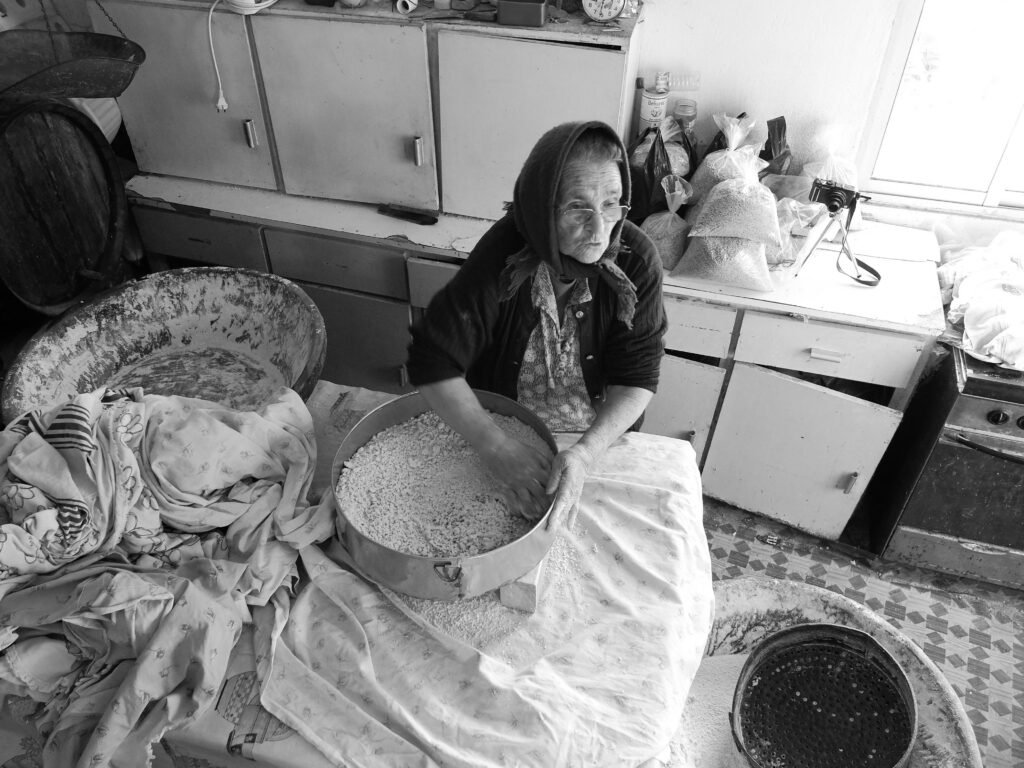
- Operational Chain: We scientifically document every stage of artisanal production — from the initial agglomeration of the semolina (“rolling”) to the final drying process — ensuring the technical preservation of this intangible heritage.
Strategic Objectives: The Calheta Living Lab
The project focuses on transforming agricultural challenges into sustainable tourism solutions, using Calheta as an experimental laboratory:
- Preserving Agrodiversity: Supporting the few remaining farmers who still produce wheat in Calheta and reintroducing local varieties (landraces) such as Trigo Canoco.
- Social Innovation: Assisting couscous producers in transitioning to the use of local wheat and creating direct partnerships with the catering sector, such as the collaboration with Chef Duarte Martins.
- Justice and Regeneration: Ensuring a fairer distribution of tourism benefits among local communities, measuring the impact of this integrated model on the environment and social fabric.
Innovation and Guarantee: The We Care Label
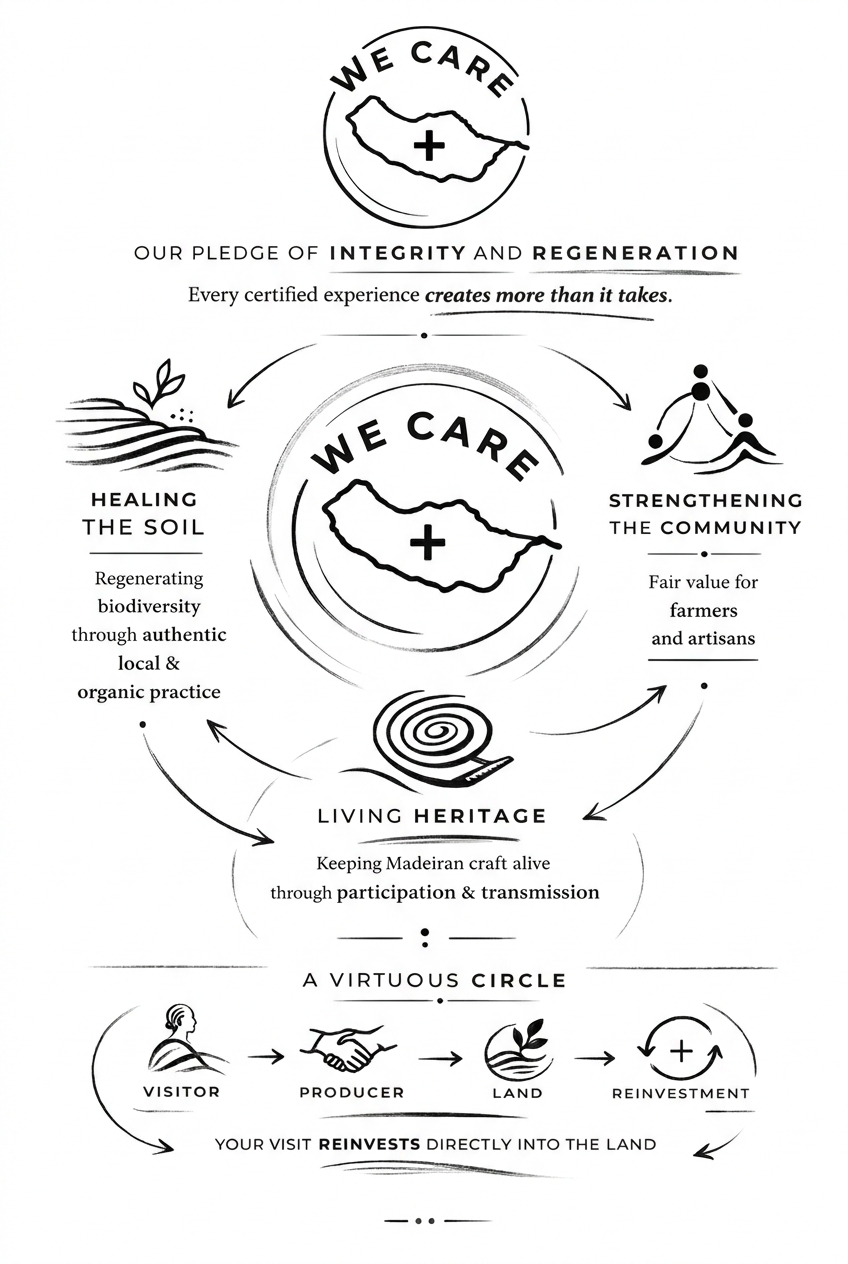
As a direct result of the research and the commitment to the territory, the project created the We Care: Our Pledge of Integrity and Regeneration label. This seal ensures that the experience adheres to a rigorous Charter of Principles:
- Healing the Soil: Cultivation of ancient wheat varieties through organic practices.
- Social Equity: Implementation of Fair Trade mechanisms, ensuring that farmers and artisans receive a premium that dignifies their specialised knowledge.
- The Tourist as a Partner: Within the We Care framework, the visitor is no longer a passive observer. By participating, the initiate is integrated as a co-regenerative partner, whose direct contribution sustains the system and allows for reinvestment in Calheta’s agricultural and human heritage.
Research Team
António José Marques Silva (Coord.) University of Madeira: Centre for Research, Development and Innovation in Tourism – Pole Madeira / High School of Technologies and Management. University of Évora: UNESCO Chair in Intangible Heritage and Traditional Know-How. ORCID: 0000-0002-5971-1574 | antonio.jmsilva@staff.uma.pt
Naidea Nunes Nunes University of Madeira: Centre for Research, Development and Innovation in Tourism – Pole Madeira. University of Évora: UNESCO Chair in Intangible Heritage and Traditional Know-How. ORCID: 0000-0002-6959-608X | naidean@staff.uma.pt
Rossana Andreia Neves Santos University of Madeira: Centre for Research, Development and Innovation in Tourism – Pole Madeira / High School of Technologies and Management. ORCID: 0000-0002-0221-880X | rossana.santos@staff.uma.pt